
DGmark Institute
INTRODUCTION
A career in digital marketing has moved from “good to have” to “must have” for anyone who wants to grow in the modern job market. Yet many students and working professionals in Mumbai still struggle to find training that is practical, up to date, and truly connected with real job opportunities. If you are confused by dozens of institutes, course promises, and fee structures, this guide will help you understand what actually matters—and how a practical, hands-on institute can change your career trajectory.
Why digital marketing is a smart career move
Businesses of every size now depend on online visibility, performance marketing, and social media presence to survive and grow. From local salons and coaching classes to big brands in finance, e‑commerce, and health, everyone needs people who can run campaigns, rank websites, and generate leads. This demand has created a steady rise in roles like SEO specialist, performance marketer, social media manager, content strategist, and marketing automation executive.
Unlike many traditional degrees, digital marketing skills are directly linked to measurable business outcomes—traffic, leads, and sales—which makes skilled professionals highly valuable and often better paid. Another big advantage is flexibility: you can work as a full‑time employee, freelancer, or even start your own agency once you master the tools and strategies.
What to look for in a digital marketing course
When choosing a course, most people focus only on fees and duration, but there are more important factors that decide the real ROI of your investment.
Key things to check:
- Curriculum depth: A strong program should cover website creation, SEO, SEM, social media, content, email, automation, analytics and AI tools—not just superficial overviews.
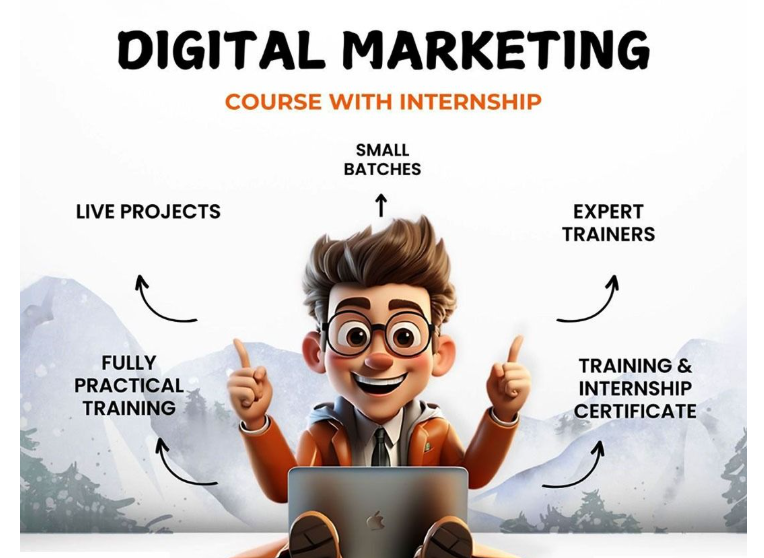
- Practical implementation: Look for live projects, case studies, assignments and campaign practice instead of only theory-based lectures.
- Trainer background: Instructors who actively work in the industry bring current strategies, tools and examples into the classroom.
- Placement support: Serious institutes offer interview preparation, internships, and connections with hiring partners, not just a certificate.
- Language and batch flexibility: Multiple language options and convenient batch timings matter a lot if you are a student, homemaker or working professional.
If an institute is not transparent about modules, tools, certifications, or placement partners, it is a red flag and you should dig deeper before enrolling.
The shift from theory to hands‑on learning
Traditional marketing courses often focus on definitions and concepts, leaving students confused when they actually sit in front of Google Ads, Meta Ads Manager or a WordPress dashboard. Today, companies want candidates who can set up campaigns, build landing pages, analyze data, and optimize budgets from day one. That’s why hands‑on learning has become the core of effective digital marketing training.
A practice‑first environment lets you:
- Build real websites and blogs instead of just reading about CMS and hosting.
- Run demo campaigns on search, display and social platforms to understand how targeting, bidding and creatives work in real time.
- Use tools like keyword planners, analytics dashboards, email automation software and 30+ AI tools to speed up content, ads and reporting.
- Work on mini-projects that can be shown in your portfolio or discussed during job interviews.
This kind of exposure builds confidence and makes it easier to crack assignments and practical rounds during placements.
Why structured curriculum and AI tools matter
The digital landscape now changes at a speed that textbooks cannot match. Search algorithms, ad policies, and social media formats keep evolving, and AI has entered almost every marketing workflow. A modern curriculum must therefore include both fundamentals and emerging tools.
Well‑designed programs in Mumbai are now offering 55–60+ modules that include SEO, SEM, social media, performance marketing, automation, website design, analytics and more. Some institutes have gone a step further by adding 30+ AI tools—covering content creation, ad copy, creatives, automation, and analytics—to ensure students stay competitive in the job market. When you learn how to combine strategy with AI tools, you become far more productive and can handle larger portfolios with better results.
For example, you might learn to:
- Use AI to generate ad variations and test multiple creatives faster.
- Build SEO‑optimized content briefs and outlines in minutes.
- Analyze campaign performance using dashboards that summarize complex data.
The advantage of learning in Mumbai
Mumbai has always been a hub for advertising, media and startups, and the same energy is visible in its digital marketing ecosystem. Many agencies, e‑commerce businesses and SaaS companies are headquartered or have strong operations here, which means more internships and fresher roles for trained candidates.
Quality institutes in the city typically maintain centres at locations like Goregaon, Andheri, Borivali and Mira Road, making it easier for students from western suburbs to commute. Multiple centres also mean more batch options and better access to labs and mentoring. For learners who cannot travel regularly, some institutes offer online batches with live classes while still maintaining the same practical approach.
Placement support and real career outcomes
One of the biggest questions every learner has is: “Will I actually get a job after this course?” While no genuine institute can guarantee a job, strong placement support can definitely improve your chances. Serious training institutes maintain a dedicated placement cell, prepare you for interviews, and invite companies for hiring drives.
You should look for:
- 100% placement assistance, including resume building and mock interviews.
- Tie‑ups with agencies, startups and brands looking for trained digital marketers.
- Transparent placement records and examples of students placed in companies like Reliance, Eduonix or other well‑known brands.
Over six months of consistent practice, many students move from being complete beginners to managing live campaigns, freelance projects, or full‑time roles in SEO, social media and performance marketing.
How DGmark‑style training fits into this picture
When you evaluate institutes in Mumbai, you will notice a few that tick almost all the boxes discussed above—practical curriculum, AI tools, multiple centres, multilingual batches, and structured placement support. DGmark Institute is an example of this approach, positioning itself as one of the fastest‑growing digital marketing institutes in the city with centres in Goregaon, Andheri, Borivali and Mira Road.
Their flagship digital marketing course is typically 6 months long, includes 60+ updated modules, and integrates 33+ AI tools along with training in website creation, SEO, SEM, social media and graphic design. Fees are around ₹39,000 including taxes, which is competitive when you factor in the curriculum depth and placement assistance. The institute also highlights support for Hindi, Marathi and English batches, which is helpful for learners who are more comfortable in regional languages.
Because DGmark Institute is closely connected with its own agency ecosystem, students are exposed to real projects, campaigns and case studies rather than only hypothetical examples. This blend of classroom learning and agency‑style practice makes it easier for learners to understand how strategies work in the real world.
Who should consider this type of course?
A comprehensive digital marketing course is suitable for:
- Students who have just completed 12th, graduation or post‑graduation and want an industry‑ready professional skill.
- Working professionals from sales, marketing, operations or non‑technical backgrounds who want to switch careers or upskill.
- Business owners and freelancers who want to run their own campaigns instead of fully depending on external agencies.
- Homemakers or career‑break professionals looking for flexible, high‑growth work options.
Because batches are structured for different time slots and experience levels, learners can start even if they have zero technical background. Over time, they progress from understanding basics like domains and hosting to handling analytics, budgets and full‑funnel strategies.
Final thoughts: choosing the right path
If you are serious about building a career in digital marketing, the right training environment will save you months of confusion and trial‑and‑error. Focus on institutes that combine practical modules, AI tools, multilingual support and strong placement assistance, instead of just chasing the lowest fee. Mumbai’s ecosystem provides a fertile ground for internships, live projects and jobs—your main task is to choose a place that helps you tap into those opportunities with confidence.
When you compare options, don’t let only the fee or “shortest duration” guide your decision. Look closely at the curriculum, batch size, trainer experience, placement ecosystem and student outcomes. An institute that is transparent about its modules, cities or branches, reviews and placement partners usually has stronger systems in place than one that focuses only on big promises. In the long run, the extra quality you get from a practice‑oriented course can easily pay back through higher starting salaries, faster promotions and better freelance opportunities.
Another important factor is how future‑ready the program is. With AI, automation, and performance marketing becoming central to every campaign, you need training that already includes these elements instead of treating them as optional add‑ons. Institutes that have integrated 30+ AI tools, marketing automation, and analytics dashboards into their regular curriculum clearly understand where the industry is heading. This kind of exposure ensures you are not outdated the moment you complete your course.
It also helps to choose a place that is genuinely embedded in the digital ecosystem, not operating in isolation from the industry. For example, DGmark Institute draws on the experience of its agency background and positions itself among the top digital marketing courses in Mumbai, with centres in Goregaon, Andheri, Borivali, Mira Road and even expansion to locations like Thane. Being connected to an active agency setup means students see how campaigns are planned, executed and reported in real‑world conditions rather than only inside a classroom.
Practical details such as duration, fee and batch format also matter when you are planning your career move. The flagship certification at DGmark Institute, for example, runs for around six months at two hours per day, with fees of about ₹39,000 including taxes, while longer diploma programmes go up to one year with extended depth and a higher fee. For many learners, having EMI options and multiple centres makes it easier to commit without putting too much pressure on monthly finances. When training is both affordable and intensive, it becomes realistic for students, fresh graduates and working professionals to upskill alongside their existing responsibilities.
Finally, look at what happens after the course. A dedicated placement and training cell, regular hiring drives and a visible alumni network signal that an institute takes your career outcomes seriously. DGmark Institute, for instance, highlights 100% placement assistance, a separate placement department and alumni placed at companies such as Reliance, Eduonix and several digital agencies, which shows that its curriculum is aligned with industry expectations. When you can learn, build a portfolio and step directly into interviews with confidence, the transition from classroom to career becomes much smoother.
If you are standing at a crossroads—wondering whether to continue in your current path or invest in a high‑growth skill—digital marketing is one of the few fields that combines creativity, analytics and long‑term career security. Choosing a structured, hands‑on program like those offered by institutes such as DGmark Institute can be a strong first step towards that shift. With the right guidance, you don’t just learn “how platforms work”; you learn how to build campaigns, brands and careers in the digital world.