
Google Ads vs. Facebook Ads: Which Has Better ROAS? (2025)
Introduction
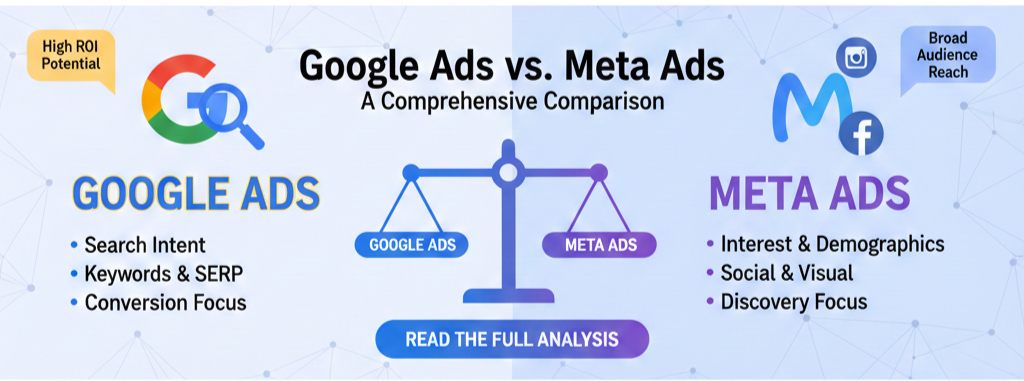
Every marketer faces the same dilemma: unlimited ambition with a limited budget. Should you bet on Google’s high-intent searchers or Facebook’s massive audience targeting? The answer determines your profitability.
Exploring Google Ads vs. Facebook Ads: Which Platform Offers Better ROAS for Your Industry reveals that there is no universal winner—only the right tool for your specific goals. While Google captures active buyers, Facebook excels at generating demand.
To understand where to put your money, we first need to define the metric that matters most: ROAS (Return on Ad Spend). Unlike ROI, which looks at overall profitability, ROAS measures the gross revenue generated for every dollar spent on advertising. A ROAS of 4:1 means you make $4 for every $1 you spend.
In this guide, we will analyze costs, conversion rates, and industry benchmarks to help you stop guessing and start maximizing your return. Let’s settle the score.
The Core Difference: Intent vs. Discovery
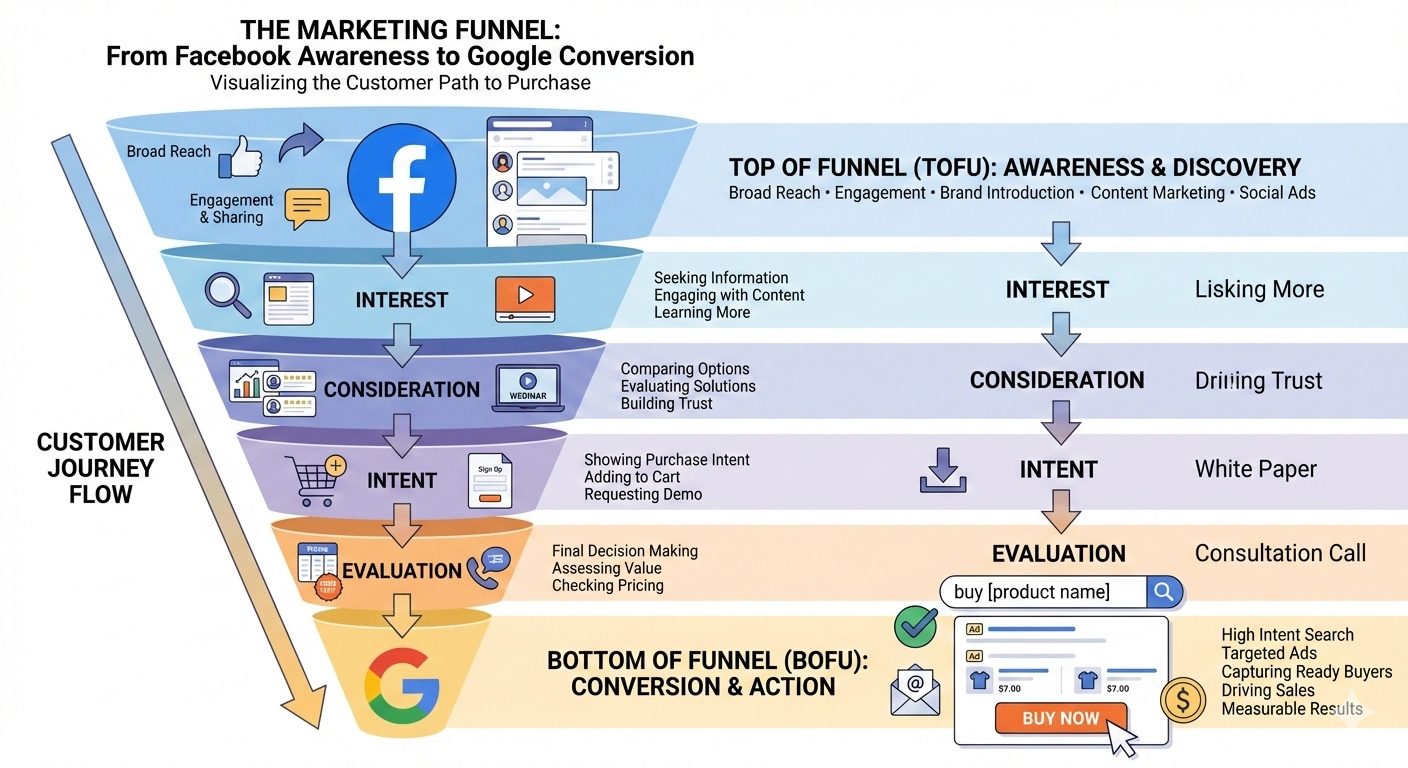
To choose the right platform, you must understand the mindset of the user. The fundamental difference between Google and Facebook isn’t the technology; it is the psychology of the user at the moment they see your ad.
Google Ads:
The “Demand Capture” Engine
Google Ads (formerly AdWords) is synonymous with Paid Search. It operates on a “pull” model. Users are actively typing queries into a search bar because they have a specific problem or desire they want to fulfill right now.
When a user searches for “emergency plumber near me” or “best CRM for small business,” they are displaying High Commercial Intent. They don’t need to be convinced that they have a problem; they are already looking for the solution. Your job on Google is not to create desire, but to capture the demand that already exists.
Facebook/Meta Ads:
The “Demand Generation” Engine
Facebook (and Instagram) Ads operate on a “push” model, also known as Paid Social. Users are not on Instagram to buy your product; they are there to connect with friends, watch Reels, or decompress.
Here, you are targeting users based on who they are (demographics, interests, behaviors) rather than what they want at that exact moment. This makes Facebook a powerful engine for Brand Awareness and Demand Generation. You are disrupting their feed to say, “You didn’t know you needed this, but look how cool it is
Cost & Performance Comparison
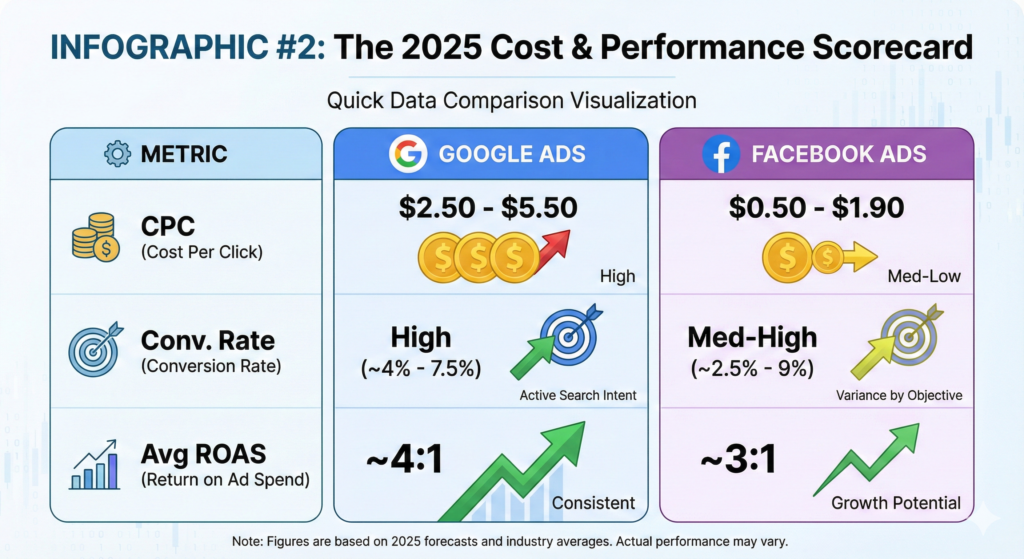
Opinions are useful, but data is undeniable. Let’s look at the average costs and performance metrics for 2024–2025 to see how the platforms stack up financially.
Cost Per Click (CPC)
Facebook: Generally cheaper. The average CPC across all industries hovers between $0.50 and $2.00. Because the intent is lower, the inventory is vast, keeping prices lower (though they are rising).
Google: Generally more expensive. The average CPC ranges from $2.50 to $6.00+. In highly competitive industries like legal or insurance, CPCs can skyrocket to $50+. You pay a premium for the “warmth” of the lead.
Conversion Rates
Google (The Winner): Because users are searching with intent, conversion rates on Google are typically higher, averaging 3.75% to 4.40%.
Facebook: Conversion rates are generally lower, averaging 0.90% to 1.50%. This is because you are interrupting a user who wasn’t planning to shop, requiring more “nurturing” to get the sale
ROAS Benchmarks
Google Standard (2:1 to 4:1): Google tends to provide a stable, consistent ROAS. It is reliable but competitive.
Facebook Standard (4:1 to 8:1+): Facebook is more volatile. However, if you have a viral creative or a perfect product-market fit, Facebook offers the potential for explosive ROAS that Google cannot match due to search volume limits.
Industry Showdown: Who Wins Where?
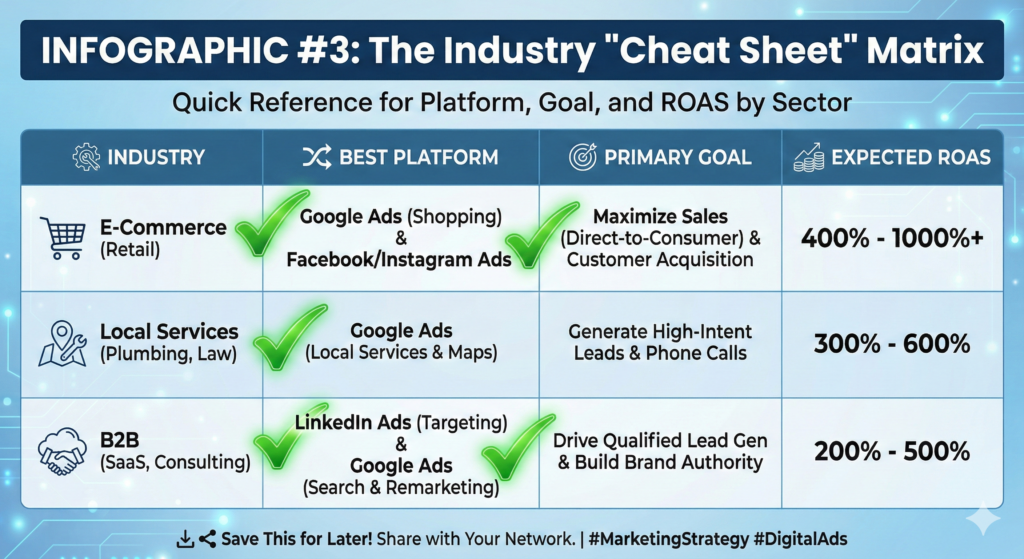
This is the most critical section for your strategy. “Better” is subjective; “Better for you” is measurable. Here is how the platforms perform across major industries.
E-Commerce & Fashion
The Winner: Facebook & Instagram
The Why: Retail is visual. You cannot sell a lifestyle or a fashion aesthetic through a text-based search result as effectively as you can with a high-definition video or carousel ad. Impulse buying behavior drives high ROAS here.
The Strategy: Utilize Dynamic Product Ads (DPA).
If a user views a pair of shoes on your website but doesn’t buy, Facebook can automatically show them that exact pair of shoes in their feed later. This strategy frequently yields a ROAS of 6:1 or higher.
Local Services (Plumbers, HVAC, Lawyers)
The Winner: Google Ads
The Why:
This is driven entirely by urgency. If a pipe bursts in a homeowner’s basement, they are not going to scroll through Instagram hoping to see a plumber’s ad. They are going to Google “emergency plumber near me” and call the first number they see.
The Strategy:
Invest heavily in Local Services Ads (LSA) and Google Maps placements. Combining this with a strong [Internal Link: Local SEO] strategy ensures you dominate the local pack.
B2B & SaaS
The Winner: It’s a Split (The Hybrid Approach)
The Why: High-ticket B2B software sales have long sales cycles.
Google’s Role: Capture the active researcher searching for “best marketing automation tools” or “Salesforce alternatives.” These are your hottest leads.
Facebook’s Role: B2B buyers are people, too. Use Facebook/LinkedIn for retargeting. If they read your blog but didn’t sign up for a demo, show them a case study or a whitepaper download on their social feed to keep your brand top-of-mind.
Innovative & New Products
The Winner: Facebook
The Why: This is the “Steve Jobs” rule: People don’t know what they want until you show it to them. If you have invented a new type of ergonomic pillow, nobody is searching for it because they don’t know it exists.
The Strategy:
You must disrupt the feed. Use demonstration videos and influencer testimonials on Facebook and TikTok to create the demand from scratch.
The "Hybrid" Approach: The Secret to Maximum ROAS
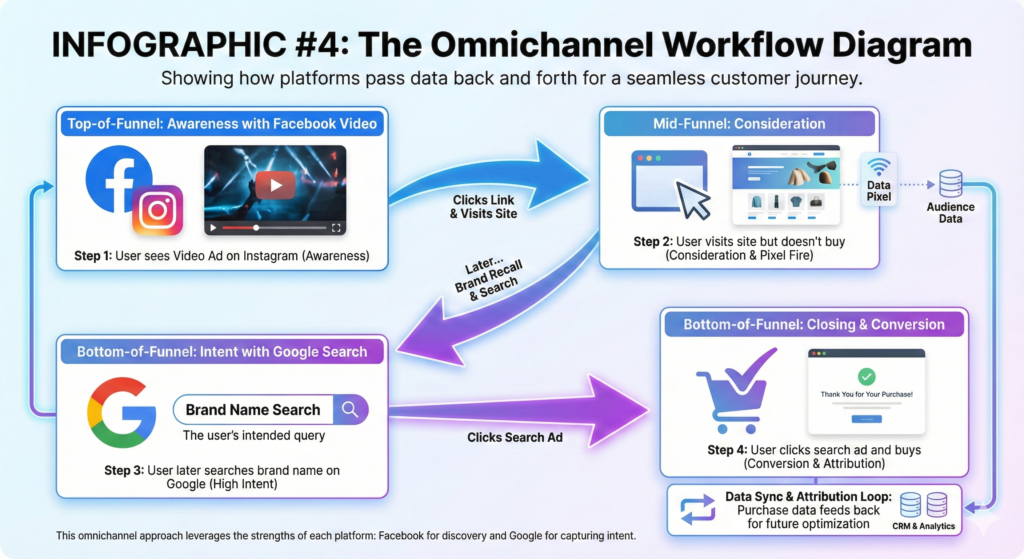
The smartest marketers don’t treat this as a binary choice. They understand that Digital Marketing ROI is maximized when the platforms work together in a Full-Funnel Marketing strategy.
Instead of asking “Which one?”, ask “In what order?
The Perfect Omnichannel Workflow:
Top of Funnel (Awareness):
Use Facebook/Instagram Reels to run broad, low-cost video ads showcasing your product’s problem/solution dynamic. Your goal here is cheap traffic and video views, not immediate sales.
Middle of Funnel (Consideration):
As those users begin to recognize your brand, they will eventually go to Google to research you or your competitors. Use Google Search Ads on your brand name and key terms to ensure you capture that traffic.
Bottom of Funnel (Conversion):
For the users who visited your site via Google but left without buying (cart abandoners), use Facebook Retargeting with a discount code or a “low stock” warning to close the sale.
Key Factors That Kill ROAS (On Both Platforms)
Even on the “right” platform, you can hemorrhage money if your execution is flawed. Here are the biggest ROAS killers to watch out for.
On Google Ads:
Broad Match Waste:
Using broad match keywords without a robust negative keyword list is the fastest way to burn budget. You end up paying for irrelevant clicks (e.g., a luxury watch brand paying for clicks on “cheap battery repair”).
Landing Page Experience:
If your ad promises “50% Off” but the landing page doesn’t show the discount immediately, the user bounces. Google punishes this with a low Quality Score, raising your CPC. Tip: Ensure your landing page is optimized for [Internal Link: Conversion Rate Optimization].
On Facebook Ads:
Ad Fatigue:
Social media moves fast. If you show the same image to the same audience for two weeks, your CTR (Click-Through Rate) will plummet, and Facebook will charge you more to show it. You must refresh creative constantly.
Weak Creative:
On Facebook, the creative is the targeting. If your video doesn’t hook the user in the first 3 seconds, they scroll past.